
How to File Previous Years' Taxes: A Step-by-Step Guide

When it comes to filing taxes, it truly is a case of "better late than never." By filing prior-year tax returns, you can pay penalties, catch up on late tax payments, and prevent interest from compounding further. Below are a few simple steps to help you file your back taxes and get caught up with the Internal Revenue Service.
What Are Back Taxes?
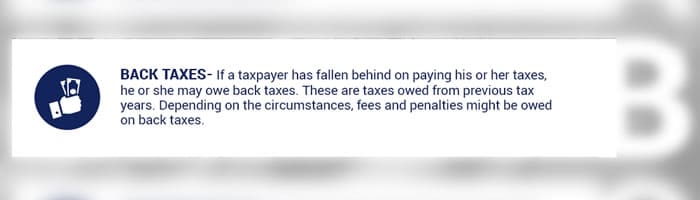
Back taxes are unpaid taxes from previous years that remain outstanding past their original due date. The IRS begins charging penalties and interest on these overdue taxes the day after the tax filing deadline passes. If you failed to file a tax return or filed but didn't pay what you owed, you have back taxes that need to be addressed.
Even if you're due a refund, unfiled returns from previous years are still considered back taxes. However, you only have three years from the original due date to claim any refund you're owed; after that, you forfeit the money permanently.
What You Need Before You File
Depending upon how far back you need to file, you may have to do a little bit of legwork to track down the documentation for your income and deductions. If you no longer have your income paperwork and you're an employee, your employer's payroll department is usually the best place to obtain another copy of a prior W-2.
If you're self-employed, you will need to contact prior and current clients who may have records of 1099s they've sent you in the past. You can also send Form 4506-T to the IRS, or request it instantly online through the IRS Get Transcript tool. This form is an official request for a transcript of W-2s, 1099s, and 1098s issued in your name and Social Security number going as far back as 10 years.
Even though you are filing late, you are still eligible for deductions and credits, but you need to have documentation to prove your eligibility. Credit card and bank statements, which are usually available for many years back, are often a good way to document expenses when the original receipt can no longer be found.
| Document Type | Where to Get It | Why It Matters |
|---|---|---|
| W-2 | Your employer's payroll department | Confirms wages and withholding for each year you need to file |
| 1099s | Prior and current clients; or request via Form 4506-T or the IRS Get Transcript tool | Documents self-employment or contract income going back up to 10 years |
| 1098s | Your lender or servicer | Supports deductions for mortgage interest or student loan interest |
| Receipts for deductions | Your own records; credit card or bank statements as backup | Required documentation to claim deductions and credits even when filing late |
| Credit card and bank statements | Your financial institution (usually available several years back) | Reconstructs expenses when original receipts can no longer be found |
How to File Previous Years' Taxes: Step by Step
Step 1: Determine which years you need to file
Pull your IRS Tax Account Transcript to see which years have no return on file. The IRS generally considers the last six years the compliance threshold for most filers, though there is no statute of limitations on unfiled returns.
Step 2: Gather your documents
Use the methods above to obtain W-2s, 1099s, and other income records for each year you need to file.
Step 3: Download prior year tax forms
You must use the forms and instructions from the specific tax year you are filing, not the current year's forms. Prior year forms are available on the IRS.gov website and through E-file.com for the years our software supports (tax years 2022, 2023, and 2024).
Step 4: Prepare your return
Complete your return using the correct year's forms. You are entitled to claim all deductions and credits available in that tax year, provided you have documentation.
Step 5: File and pay
For the current year and the two most recent prior years, you may be able to e-file. For older returns, you must paper-file by mailing your completed forms to the appropriate IRS service center.
Pay as much of the balance as you can when you file. If you cannot calculate the exact penalties and interest, paying at least the original tax owed limits further accrual. The IRS will send you a notice confirming any remaining balance or refund.
Why You Should File Previous Years’ Back Taxes
Filing your back taxes offers several important benefits:
- Stop Accumulating Penalties and Interest: The IRS charges a failure-to-file penalty of 5% of unpaid taxes per month (up to 25%) and a failure-to-pay penalty of 0.5% per month. Filing stops the failure-to-file penalty immediately, even if you can't pay the full amount.
- Claim Your Refund Before The Window Closes: If you're owed a refund, you must file to receive it. However, you only have three years from the original due date to claim refunds and credits.
- Protect Social Security Benefits: Self-employed individuals who don't file will not receive Social Security credits for their earnings, potentially affecting future retirement and disability benefits.
- Avoid Substitute Returns: If you don't file voluntarily, the IRS may file a substitute return for you that doesn't include deductions and credits you're entitled to, resulting in a higher tax bill.
- Satisfy Lender Requirements: Mortgage lenders and other financial institutions typically require copies of recent tax returns for loan approval.
Ready to catch up? E-file.com prepares prior year returns for 2022, 2023, and 2024. For 2023 and 2024 returns, you can e-file directly; no printing, no mailing, IRS confirmation included. Start your prior year return.
Frequently Asked Questions
How do I print a copy of a return I prepared?
If you previously used E-file.com to prepare a tax return that was transmitted and accepted by the IRS, you can print a copy by clicking "Prior Year" on the my account page. If your return is not accessible within your E-file.com account, you may need to use the IRS transcript service in order to obtain a copy.
How far back can you claim a refund?
You have three years from the original due date of a return to claim any refund you are owed. After that deadline, the IRS keeps the money permanently; it cannot be applied to another year or recovered through an amended return.
Can you e-file previous years' taxes?
It depends on how old the return is. The IRS accepts electronic filing for the current tax year and the two most recent prior years. For 2026, that means you can e-file returns for 2025, 2024, and 2023. Returns for 2022 and earlier must be paper-filed by mail.
Can you claim deductions on a previous year's tax return?
Yes. Even when filing late, you are entitled to all deductions and credits that were available in that tax year, standard deduction, itemized deductions, and credits, as long as you have documentation. Use the forms and instructions from the specific year you are filing, not the current year.