
How to File an Amended Tax Return: 2026 Update
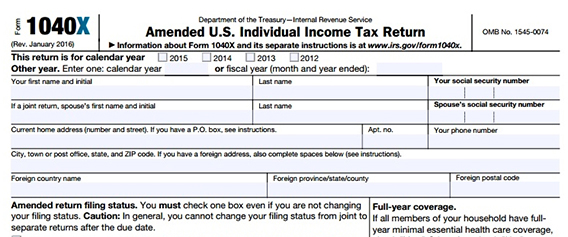
With all the complexities of the U.S. tax code, there are times when mistakes are made on a tax return. So what do you do when you need to amend your income tax return?
First, you want to make sure that you actually need to proceed with an amendment. The IRS will automatically correct math errors and minor clerical mistakes during processing and will contact you if additional forms are needed. You only need to file an amended return if there is a substantive error involving your filing status, income, deductions, credits, dependents, or tax liability.
In most cases, you have to file your amended return within three years of the date you filed the original tax return, or two years from the date you paid any tax liability, whichever is the later of the dates. If you filed early, the three-year period begins from the April tax deadline, not the date you actually filed.
Wait until your original return has been fully processed before filing an amendment. If you are expecting a refund, receive it first. Filing an amendment before the original return is processed can cause delays.
Now, if the problem with the return is because you did not report income, or you filed under the wrong status or made other errors that would require you to pay more taxes, then you must file an amended return to correct the problems.
Steps and Forms for Filing and Amended Tax Return in 2026
The first step in filing the amended return is to obtain Form 1040-X. The 1040X serves as a replacement to the original tax return. It also shows the difference between your original taxes and the amended return, so you will have to be prepared to document every deduction in the same manner as when you originally filed. Form 1040-X has three columns: the original amounts reported, the net change, and the correct amounts. Part III of the form requires a clear written explanation of why you are making changes. Any schedules or supporting forms affected by your changes should be attached.
Make sure to double-check everything; your amended tax return is likely to be examined even more closely than the original return.
Form 1040-X can now be filed electronically for the current tax year and the two prior tax years, provided your original return was filed electronically and your tax software supports it. Returns for tax year 2021 or earlier must be filed on paper. You can file up to three amended returns for the same tax year.
If your amendment results in a higher tax bill, pay the additional amount as soon as possible to minimize interest and penalties. Mail a check or money order payable to United States Treasury with Form 1040-V. If you file after the April due date, do not include interest or penalties on your amended return — the IRS will calculate those automatically.
If your amendment results in a larger refund, the IRS will issue an additional refund for the difference. For tax years 2021 and later, you can request direct deposit of the refund when filing electronically.
The status of your amended return can sometimes take longer to determine. It generally takes 8 to 12 weeks to process, and in some cases up to 16 weeks. You can track your amended return using the IRS Where’s My Amended Return tool — here. The online tool will tell you if the return has been received, adjusted, or completed. It may take three weeks for your submitted return to appear in the online system.
If you amend your federal return, it may also affect your state tax liability. Contact your state’s Department of Revenue for guidance on filing a state amended return. Do not attach your state return to your federal Form 1040-X.
Frequently Asked Questions
Is there a penalty for filing an amended tax return?
There is no penalty simply for filing an amended return. However, if your amendment shows that you owe additional tax, interest accrues from the original due date and a late payment penalty may apply if you don’t pay promptly. Filing a voluntary amendment before an IRS audit can also help you avoid accuracy-related penalties.
Can the IRS reject an amended return?
Yes. Common reasons for rejection include missing supporting forms, a vague explanation of changes in Part III, incorrect Social Security numbers, or filing outside the three-year deadline. If rejected, you can correct the errors and resubmit, or file on paper if you have already reached the three-amended-return e-file limit for that year.
Is it worth filing an amended return?
Generally yes, if the error significantly affects your refund or tax liability. If the change is minor and the IRS is likely to catch and correct it automatically (such as a math error or missing form), amending may not be necessary.
Can I amend a return from several years ago?
You can file a return for any prior year, but you can only claim a refund on an amended return filed within three years of the original due date or two years from the date the tax was paid, whichever is later. Outside that window, you lose the right to any refund for that year.
Note: Tax laws may change with little notice. We do our best to keep this information current, but it is provided on an “AS IS” basis. It is should not be considered, legal, financial, or other professional guidance. For more, see our terms.