
File Puerto Rico Taxes & Get Your Tax Refund Fast
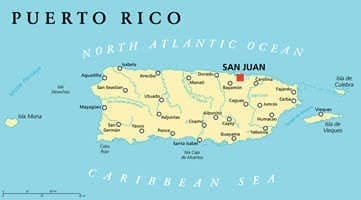
Puerto Rico is a commonwealth of the United States with its own independent income tax system. Though modeled on the U.S. federal tax system, PR tax rates and laws differ.
As with other United States territories, Puerto Rico classifies taxpayers living within its borders into categories based on the following residency status:
- Bona fide residents who are U.S. citizens or resident aliens
- Bona fide residents who are nonresident aliens of the U.S.
- Not bona fide residents of Puerto Rico
In many cases, Puerto Rican taxpayers must file Puerto Rico tax returns with both Puerto Rico and the U.S. government. Citizens and resident aliens who are bona fide residents can claim tax credits for each location on the other's tax form, e.g., a U.S. citizen with income in both places will claim credit for his or her Puerto Rican income on his or her U.S. return, and vice versa.
Proving Puerto Rico Residential Status
Residents are categorized as bona fide if they:
- Meet the presence test
- Don't own a home outside of Puerto Rico
- Don't have a more significant connection to the U.S. or other countries
Individuals must meet one of the following five requirements to qualify for the presence test:
- Be present in the commonwealth for 183 or more days during the previous year OR
- Be present for 549 or more days during the tax year AND two immediately preceding tax years (with a minimum of 60 days in PR in each of those three years) OR
- Not be present in the U.S. itself for more than 90 days OR
- Not have had a significant connection to the U.S. OR
- Have not earned more than $3,000 from activities in the U.S.
Members of the military and their spouses are a special case. If a member of the military is abroad fulfilling their duty, the time spent away from Puerto Rico will not affect their residency or that of their spouse. If a member of the military is only there as part of their service, that alone will not grant residency.
Citizens and resident aliens who are bona fide residents can claim tax credits for each location on their tax form. For example, a U.S. citizen with income in both places will claim a credit for Puerto Rican income on their U.S. return, and vice versa.
Exceptions to Residential Status
If a taxpayer owns a home outside of Puerto Rico and uses that home as a rental property, then that particular home will not affect the person's bona fide residency unless that person occupies the rental home for more than 14 days OR
That person occupies the home for a period equal to or greater than 10% of the number of days the home was occupied by tenants.
Who Must File
In general, bona fide residents of Puerto Rico don’t have to file a U.S. federal income tax return on income sourced from within the commonwealth.
However, taxpayers are required to file taxes in the U.S. if their income is from sources outside of Puerto Rico (including U.S. sources) and the income amount exceeds the U.S. filing threshold.
Taxpayers reporting U.S. income on a Puerto Rican tax return could claim a commonwealth credit (up to the allowable amount) for taxes paid to the United States.
More information about filing taxes as a PR bona fide PR resident..
U.S. government employees (including members of the U.S. Armed Forces) must file a U.S. tax return, reporting all government-received income. For additional information about government and Armed Forces tax-filing requirements, click here.
Further Assistance from the IRS
Taxpayers should familiarize themselves with IRS Publication No. 570, available from the IRS here, which provides information regarding most tax situations.
Frequently Asked Questions
When are Puerto Rican tax returns due?
A PR return should generally be filed by April 15, similar to the U.S. tax return deadline.
Am I eligible for deductions and credits when I file a Puerto Rican return?
If you are a bona fide resident filing a U.S. tax return, it’s possible to claim deductions and credits applicable to income reported on that return. Furthermore, you could qualify for child tax credits.
Note: States & U.S. territories may make changes to their tax laws with little notice. We do our best to keep this information up-to-date, but it is provided on an "AS IS" basis. For more see our terms.